Creating Interactive Content Walls for Student Engagement
Anna Müller ·
Listen to this article~4 min
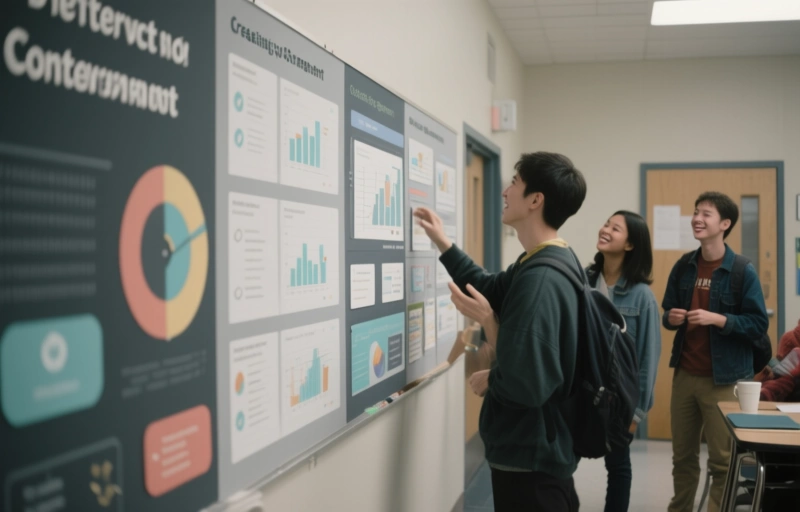
Learn how to create engaging content walls for educational materials using CSS and JavaScript. This guide covers practical implementation, psychological benefits for student engagement, and common pitfalls to avoid when gating learning content.
You know that feeling when you're trying to share something valuable with your students, but you want to make sure they're really engaging with the material? That's where content walls come in. They're not about locking things away arbitrarily. They're about creating intentional learning moments.
Think of it like a treasure hunt for knowledge. You're guiding students through a journey, not just dumping information on them. The process of unlocking content creates anticipation and makes the revealed material feel more valuable.
### What Makes a Good Content Wall
Let's break down the practical side. A content wall needs to be visually distinct but not distracting. You want it to signal "something special here" without looking like a pop-up ad. The styling should be clean, professional, and consistent with your overall design.
Here's what works well:
- A light background with a dashed border creates visual separation
- Clear instructions that explain why the content is restricted
- A simple input field that's easy to use on any device
- Immediate feedback when students enter incorrect codes
That last point is crucial. If someone gets it wrong, they should know right away. But keep the tone encouraging. It's not "you failed"—it's "try again, you've got this."
### The Technical Magic Behind the Scenes
Now, here's where it gets interesting. The real power comes from the JavaScript that manages the blurring and revealing. You're not just hiding content with `display: none`. You're using CSS filters to blur everything that follows the wall.
Why blur instead of hide? It creates curiosity. Students can see there's something there, but they can't read it. It's like seeing shapes through frosted glass. That visual tease motivates them to find the right code.
The code handles multiple walls beautifully too. Imagine having a lesson with several checkpoints. Each wall only blurs the content until the next wall. So students progress through phases, unlocking one section at a time.
As one educator put it: "The best learning happens when students feel like active participants, not passive recipients."
### Why This Approach Works for Education
I've seen this implemented in various courses, and the results are fascinating. Students don't just click through. They engage differently with material they've "earned" access to. There's a psychological shift from consumption to achievement.
It also allows for differentiated pacing. Students who grasp concepts quickly can move ahead, while others can take their time without feeling rushed. Everyone reaches the same destination, but the journey adapts to their needs.
### Common Pitfalls to Avoid
Like any tool, content walls can backfire if implemented poorly. Don't make the codes too obscure or unrelated to the material. The unlocking process should feel like part of the learning, not a random puzzle.
Also, always provide clear instructions. Students should understand why they're entering a code and what they'll gain access to. Transparency builds trust, even in a gated system.
Finally, test everything thoroughly. Make sure the blurring works across different browsers and devices. The last thing you want is technical glitches interrupting the learning flow.
### Bringing It All Together
Creating effective content walls is about balance. You're protecting valuable material while making access feel rewarding. The technical implementation needs to be smooth, but the educational philosophy behind it matters just as much.
When done right, these walls don't block learning—they structure it. They create natural pauses for reflection and make the entire experience more interactive. Students aren't just reading; they're participating in their own education journey.
And isn't that what we're all aiming for? More engaged learners who feel ownership over their progress. The tools might be digital, but the human connection remains at the center.