Beat Traffic and Save Money: Is Public Transit the Smart Choice?
Anna Müller ·
Listen to this article~4 min
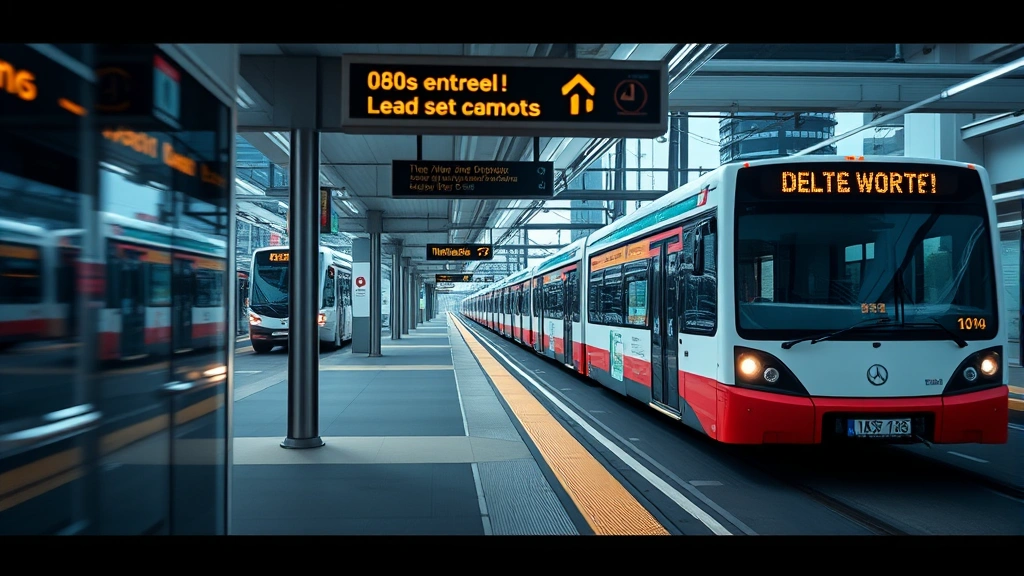
When gas prices soar, is public transit the smarter financial choice? We break down the real costs of driving versus taking the subway to help you save money and reduce commute stress.
Let's talk about that daily commute. You know the drill—sitting in traffic, watching the gas gauge drop, feeling your wallet get lighter with every mile. When gas prices spike, that frustration hits a whole new level. So, what's the alternative? Is hopping on public transit, like a subway line, actually the smarter move for your budget and your sanity?
It's a question worth asking, especially when filling up your tank starts feeling like a major financial decision. We're all looking for ways to cut costs without adding hours to our day.
### The Real Cost of Your Commute
First, let's break down what driving really costs you. It's not just the price at the pump. Think about it:
- The monthly car payment or lease
- Insurance premiums
- Regular maintenance and unexpected repairs
- Parking fees, which can be hundreds of dollars a month in some cities
- The gradual wear and tear that lowers your car's value
When gas prices jump by even 50 cents a gallon, that's an immediate hit. For a 15-gallon tank, that's an extra $7.50 every time you fill up. Do that once a week, and you're looking at an extra $30 a month, just like that.
### The Public Transit Equation
Now, consider the subway or bus. A monthly transit pass might cost you around $100-$150, depending on your city. That's one fixed cost. No surprise repairs, no insurance hikes, no parking tickets.
The financial math can be pretty compelling. But it's not just about dollars and cents.
What's your time worth? That's the other big factor. Sitting in bumper-to-bumper traffic isn't just annoying—it's unproductive time. On a train or bus, you can read, answer emails, listen to a podcast, or just zone out. You reclaim those minutes.
As one urban planner famously noted, "A developed country is not a place where the poor have cars. It's where the rich use public transportation." The point being, when the system works well, it's a choice that makes sense for everyone.
### Weighing the Practicalities
Of course, it's not a perfect solution for everyone. You have to ask yourself some practical questions:
- Is there a reliable transit line near your home and workplace?
- What's the actual travel time compared to driving during rush hour?
- Do you need your car for other parts of your day, like picking up kids or running errands?
- How does the cost of a transit pass compare to your current driving expenses?
For many people in urban and suburban areas, the answer is becoming clearer. The combination of high gas prices, terrible traffic, and the stress of driving is pushing folks to reconsider.
### Making the Switch
If you're thinking about trying it, start small. Maybe take transit one or two days a week. See how it feels. Calculate what you save on gas and parking for those days. You might be surprised.
Remember, it's not an all-or-nothing decision. A hybrid approach works for lots of people—driving some days, taking transit others. It's about finding what gives you the best balance of cost, time, and convenience.
At the end of the day, it's a personal calculation. But with gas prices being so unpredictable, having a reliable backup plan isn't just smart—it's a financial cushion. Your commute shouldn't control your budget. Exploring alternatives puts you back in the driver's seat, even if you're not actually driving.